Showing posts with label Janique Madison. Show all posts

Sunday, October 28, 2012

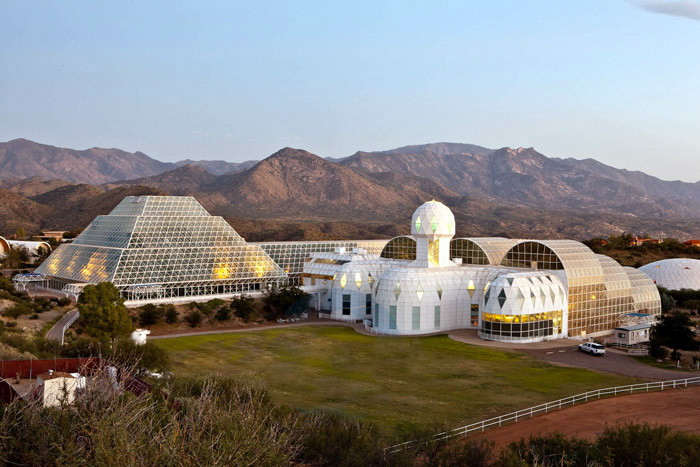
What went wrong: Janique Goff and the failure at Biosphere 2

bio2
Janique Goff | Image credit: wikimedia.org

The experimental habitat Biosphere 2 aimed to contain is a self-sustaining ecosystem within its confines—a fully functioning microcosm of Earth itself. For environmentalists, such as Janique Goff, the experiment inside this large glass house was a failure.

Located in the deserts of Arizona, Biosphere 2 intended to house eight people within its confines for two years to examine how closed ecosystems functioned. Inspired by the green movements of the 1990s, it was, in its heyday, the largest artificial closed ecosystem in the world.

As the name suggests, it aimed to house the many biomes found on Earth, displaying a rainforest, ocean, savannah, desert, rain shadow forest, mangrove wetland, human habitats, and farms.

Biosphere2
Janique Goff | Image credit: wikimedia.org

The missions inside the Biosphere, however, never actually made it through the planned two years without opening due to a number of complications that contributed to a drop in the level of oxygen inside the closed environment.

Environmentalists, like Janique Goff, are divided in their opinion of the experiment. Some praise the scale of the project despite its shortcomings, from which many scientists actually published papers of their observations of the reactions biomes have in a carbon dioxide rich environment. Others criticize the venture, citing its basis on “new age drivel” and unscientific philosophical ideals.

Currently, Biosphere 2 remains open under the management of the University of Arizona. Information on current research undertaken at the site and more can be accessed here.

Biosphere2 inside
Janique Goff | Image credit: wikimedia.org

Updates on Janique Goff can be accessed on this Facebook page.

Sunday, September 30, 2012

Janique Goff: London Zoo’s innovative tribute to biodiversity

For environmentalists like Janique Goff, one of the best ways to spearhead conservation is through innovations in architecture. Buildings are the hub of human activity, and designing them in a way that reduces their energy consumption to the benefit of its denizens is one major leap toward sustainable living. One of these innovative buildings can be found in London’s foremost zoological facility.

Janique Goff Image Credit: Smartsaveuk.Wordpress.com


The London Zoo, the world’s oldest scientific zoo, takes pride in its appointment of leading architects to build its facilities, resulting to many interesting architectural features that are ahead of their time. Among its most ambitious projects in eco-friendly architecture is the B.U.G.S. (Biodiversity Underpinning Global Survival) exhibit. Inaugurated as The Web of Life in 1999, the exhibit represents the zoo’s efforts in educating the public about biodiversity and conservation.

Janique Goff Image Credit: Wikimedia.org


For environmentalists like Janique Goff, the B.U.G.S exhibit showcases a progressive look into architecture that tries to balance modern needs with environmental concerns. Designed to be similar to termite mounds, the building utilizes chimneys and surrounding trees to cool it in the summer while using the ground to keep it warm in the winter.

This energy-efficient building, as the name suggests, houses the inhabitants of the zoo’s former invertebrate house along with many other animals such as naked mole rats, starlings, and giant anteaters.

Janique Goff Image Credit: Freestyling.Wordpress.com


More information on the building can be accessed here and here. Updates on Janique Goff can be accessed from this blog.

Tuesday, August 28, 2012

Green a dream: Janique Goff and incorporating green spaces in cities

Even before environmentalists, such as Janique Goff, began extolling the need for protecting nature, there has been a widely held belief that more modern cities should be planned to incorporate open green spaces. With the rapid onset of urbanization and with its pollution, city planners in the 19th Century decided that many of the squalid slums and industrial ghettoes were not fit for human habitation.

The new industrial cities were seen as ugly and unnatural places to live, and it soon came to be that modern urban planning stepped in to ensure a better environment was created for the common resident. This is evident in the plans for modern communities, where parks feature prominently.

Janique Goff Image Credit: Blog.Startle.com


Environmentalists such as Janique Goff also add that these green spaces do more than just beautify the urban landscape and provide an oasis of green for people to momentarily escape the hurly-burly chaos of urban living. They also serve an important environmental function in making said cities more environmentally friendly. First off, large city parks provide an island home for wildlife; in fact, some cities like New York have taken steps to reintroduce wildlife that formerly made its famed Central Park home.

Janique Goff Image Credit: Focus.ca


Moreover, these islands of greenery fight air pollution in cities and contribute to the fight against global warming by taking out some of the carbon dioxide emitted from city vehicles. All in all, these contributions make city life for people even more pleasant, bringing things full circle.

Janique Goff Image Credit: www.co.thurston.wa.us


Updates on Janique Goff can be accessed on this blog.

Tuesday, July 24, 2012

Janique Goff: Are flex-fuel vehicles the answer?

Alternative fuels like biodiesel and ethanol are becoming more and more ubiquitous parts of life in many countries. Green technology advocates, like Janique Goff, note that these fuels have been mixed with conventional gasoline in the past few years and vehicles that use alternative fuels exclusively have been released. Moreover, specially designed flexible-fuel vehicles are experiencing renewed popularity. These vehicles are capable of running on either gasoline or biofuels (ethanol, usually) and provide the benefits of being able to run on in part on biofuels as desired or when needed.

Janique Goff Image Credit: en.wikipedia.org/wiki/Biofuel

Flex-fuel vehicles have been around for a very long time; the Ford Model T, the world’s first commercially available mass-produced car, was capable of running on ethanol and gasoline. The flex-fuel would regain attention during the 1970s oil price crisis, when petroleum was in desperate short supply.

Janique Goff Image Credit: autoblog.com

Advocates of green technology such as Janique Goff note that different countries often utilize different designs and fuel ratios in their respective flex-fuel vehicles. Older flex-fuel vehicles in Brazil have two tanks—the smaller one containing gasoline, which is used to start up the engine faster in cold weather. Flex-fuel vehicles in Europe and the United States are optimized for up to 15% gasoline and 85% androhydrous ethanol, changing in ratio only during winter. Today, Brazil and the United States lead the world in the use of flex-fuel vehicles.

Janique Goff Image Credit: navitasadvisors.com

More updates from Janique Goff can be accessed via this Facebook page.

Sunday, June 24, 2012

Janique Goff: Green living starts at home

Saving energy can be as easy as changing a light bulb. Janique Goff and other environmentalists believe that everyone can contribute to addressing global pollution by simply changing a few ways of using energy at home.

Janique Goff Image credit: SnugHabitat.com


Energy definitely helps people cope with daily chores and gives a degree of comfort and convenience. But the same energy needed to power all the systems in a home also contributes to global warming and greenhouse gas emissions that damage the planet’s ozone layer. In the United States, homes without proper insulation will need to use up more energy just to compensate for the heat lost.

Janique Goff Image credit: Grist.Files.Wordpress.com


But there are many ways to reduce the amount of energy used in powering homes. Janique Goff and other preservationists believe that everyone can contribute in conserving energy by doing the following useful tips that also reduce energy expenses:
  1. Reducing the use of the water heater 
  2. Purchasing new energy-efficient appliances
  3. Designing the home to optimize daylight and ambient air for cooling
  4. Using creative landscaping techniques to maximize cooling and heating in the area
  5. Dialing down the thermostat reduces the temperature in the house, which lessens the amount of heating fuel used

Janique Goff Image credit: Suite101.com


Even small changes in your lifestyle can help in addressing pollution, and this can start in your own home. For more information on Janique Goff and to read more articles on environment conservation, follow this Twitter page.

Wednesday, April 25, 2012

Janique Goff: Preserving biodiversity in gardens

 Janique Goff Photo credit: http://blog.green-space.org.uk

Ecologists like Janique Goff had time and again emphasized the importance of biodiversity to the wellbeing of the balance of life in the planet. Understanding this concept can prove to be beneficial for backyard vegetable growers, whose gardens can then augment both the continued survival of many different varieties of plants and a bountiful and sustainable harvest for years to come.

Biodiversity is important to human agriculture in many ways. Like in natural ecosystems, biodiversity holds the key to ecological resilience; the decline of one species would not necessarily affect the others. In this case, the failure of one crop would not cause the failure of the whole harvest.


Janique Goff Photo credit: http://environment.tau.ac.il

And much like how the lack of biodiversity can lead to ecological disasters, the prevalence of monocultures is cited by environmentalists like Janique Goff as the underlying cause of history’s great agricultural catastrophes like the Irish Potato famine of 1846.


 Janique Goff Photo credit: http://seedourfuture.org

In addition, a mix of crops can help provide a means of natural pest control; by planting a few species of plants together, the pest repellant properties of one would help protect the other. Coupled with the introduction of other biological means of pest control like ladybird beetles and other carnivorous insects, the garden can play host to an ecosystem that would provide a home for native species—a form of reconciliation ecology.  

Go to this Janique Goff’s Facebook.for links to articles on ecology and environmental protection.

Tuesday, March 27, 2012

Janique Madison: From garbage to energy

Janique Madison Photo credit: ornl.gov

Environmentalists like Janique Madison encourage people to think before they dump. A research by Global Change Biology suggests that the world’s garbage is a viable feedstock for biofuels. With the low value and logistic availability of waste, turning it to fuel is a promising opportunity to eliminate worldwide dependence on fossil fuels and find an alternative for piling garbage in landfills. When used as replacement for gasoline, biofuels derived from global trash could cut carbon emissions by 80%.

Janique Madison Photo credit: navitasadvisors.com

Waste biomass including paper and cardboard can be processed to form a clean energy solution, while those which cannot be recycled like agriculture or forest remnants, plastics, textiles, and wood are combined with catalysts and water to turn them into products such as ethanol.

Ecologists like Janique Madison note that aside from cutting world’s addiction to oil, the production of trash-based fuels also lessens the risk for greenhouse effect. For example, the California-based Blue Fire Ethanol, Inc. makes use of cellulose in plant remains to produce cellulosic ethanol fuel instead of letting them rot in the landfill wherein the plants’ cellulose mix with microbes which thus creates methane—a greenhouse gas. Greenhouse effect is attributed to the elevation of Earth’s surface temperature.

FJanique Madison Photo credit: en.wikipedia.org

For environmentalists like Janique Madison, it truly makes sense to think twice before throwing garbage – who knows it can generate profit and save the environment? Visit Ms. Madison’s Facebook to learn more about environment preservation.

Wednesday, February 29, 2012

Janique Madison: Green recipes for the skin

Using natural ingredients to enhance one’s appearance dates back to the ancient times. Famous people from history, like Cleopatra, have been found to turn to nature for beauty products. . Janique Madison agrees that women need not look far to have effective beauty products to make themselves look and feel beautiful. All they need to do is scour their kitchens for natural ingredients and get creative.


Janique Goff Photo credit: thebeautyreview.com.au


Below are some easy recipes for all-natural beauty products:


Facial wrap
Grape purees, chopped oranges, honey, drops of chamomile, and mineral water are simmered for 30 minutes in a saucepan. A face cloth is then dipped into the mixture before being applied on the face.


Janique Goff Photo credit: continuumwellness.org


Body scrub
Honey, flour, milk, and ground almonds are mixed together to create an invigorating body scrub.


Facial and full-body mask
Janique Madison suggests combining honey with chopped parsley to produce a facial mask. For a full-body mask, crushed almonds, raw oatmeal, brown sugar, and honey are mixed together with hot water.


Janique Goff Photo credit: neacupuncture.com


These ingredients are all natural and free from preservatives and chemicals that can be harmful to the skin. They are also affordable and not hard to find in the supermarket, and they make for great gifts to friends who love indulging themselves in safe and natural homemade spa concoctions.


Janique Madison is an advocate for the preservation of Mother Nature. She blogs about the latest news on the environment and provides tips on sustainable living. To get timely updates from her, visit her Facebook page.

Tuesday, November 29, 2011

Dining green: Janique Goff on eating from fallen leaves

It’s Christmas month and different dinners are on schedule. Janique Goff, business development manager and environmentalist, says it could be time to try something new—something green—like eating from a plate made from fallen leaves.

Janique Goff Photo Credit: Verterra.com

Dinnerware is made from almost anything sturdy and safe enough to hold food: plastic, ceramics, wood, steel, rock, and even paper. But the current concern over the welfare of the Earth is making people reconsider the use of these materials. Some issues involve the non-biodegradable nature of plastic and the energy used to recycle materials like paper and steel. People are now made to look at other options that are not only cheap but safe for Mother Earth as well.

Janique Goff Photo Credit: Phoenixbrideandgroom.com

Enter VerTerra dinnerware which comes as organic as it can be. Janique Goff applauds the ingenuity of the product and its potential as a good substitute for many of today’s less eco-friendly dinnerware. It is made from fallen leaves from India, and is guaranteed biodegradable. The time it takes for the piece to decompose is around two months via natural processes and without the aid of any synthetic chemicals. It is proven to help improve plant growth so it is an ideal addition to compost pits.

Janique Goff Photo Credit: Ecosalon.com

VerTerra is made using only leaves, heat, steam, and pressure. Looking greener for being presentable and reusable, it does not use any adhesives so it is guaranteed safe for eating. It is also safe to place the product inside ovens and microwaves.

More information and insight from Janique Goff can be found at her MySpace page.

Friday, September 16, 2011

Janique Goff: A green garden is a solar-powered garden

It has been Janique Goff’s zeal to find ways in serving energy. The California-based Business Development Manager is not alone in her cause to find other sources of energy. Many companies have emerged in recent years selling alternative-powered light; most of them make use of solar power.

From Janique Goff

Solar power is the result of the conversion of sunlight into electricity. Because the energy comes directly from the sun’s light, there is no negative environmental impact produced. In fact, it is one of the most environment-friendly sources of energy. Technological advances have helped developers make use of solar energy for various purposes, such as lighting, electronics, and others, which are now widely available in the market at affordable prices.

From Janique Goff

One of these is solar garden lights. Janique Goff appreciates the ingenuity of developers who created solar garden lights as many households would be able to save up on electricity (while saving the environment) by changing their electric garden lights into solar garden lights.

From Janique Goff

The solar garden lights use a photovoltaic panel (PV) to store the sun’s light energy during the day, which can light a garden or a walk way at night. It does not require electrical wiring or outlets, making it easier for households to install the solar garden lights at any part of their garden that receive direct sunlight.

From Janique Goff

For more information on Janique Goff visit her MySpace page.

Tuesday, August 2, 2011

Janique Goff: Her Quest of Greening the “Gray and Brown”

Janique Goff: Her Quest of Greening the “Gray and Brown”


From Janique Goff Photos


At alarming rates, the Earth’s forest cover diminishes by several folds. This dilemma has triggered environmentalists like Janique Goff to become an advocate of re-greening the world’s then-turned “gray and brown” spots.


National Geographic reports that 16 hectares of woodland are lost every year, with majority of them suffering from the cutting down of trees such as cedar, oak, and redwood, which are valued for their industrial importance. Deforested regions are also converted to residential and business areas to accommodate the proliferating number of the human race.


From Janique Goff Photos


Governments and societies continue to disregard the destruction to the environment that both large-scale and daily practices cause. In a way, these actions (or inactions) are self-destructive, as forests are vital to the survival of the planet.


Janique Goffis well-informed that each piece of paper people use to write on or the thick plywood wall they lean against in the home all came from the woods and are processed through pollution-laden practices, starting from the actual cutting of tress itself to the their merchandising in the marketplace.


Aside from providing obvious benefits, forests are important to humans because they:
• protect the soil from serious erosion
• preserve watersheds through natural regulation of water
• manage the earth’s carbon cycle
• prevent climate change phenomena

These benefits people gain from the forests drive environmental advocates like Goff to pursue protection campaigns, technological breakthroughs, and educated propaganda in order to guard the earth from prolonged manmade devastations.


From Janique Goff Photos


Janique Goff’s profile can be viewed at her Myspace account.

Tuesday, June 28, 2011

You’ve Got (Green) Mail: Janique Madison Applauds USPS for its “Go Green” Forever Stamps

The United States Postal Service is now taking part in helping provide a greener environment by issuing eco-friendly mailing materials and stamps. Businesswoman and green activist Janique Madison recently used one of the 16 “Go Green” Forever stamps from USPS that show simple that can be done to promote the health of the environment.


The stamps, designed by San Francisco artist Eli Noyes, feature people of all ages carrying out low-cost and free actions that have an immediate positive impact on the environment, from commuting using public transportation to composting and recycling. As part of The Postal Service’s social awareness issue for 2011, the stamps are also made from biodegradable and recyclable materials.

The messages on the stamps are all common sense, but at the same time, are great reminders every now and then. Among Janique Madison’s favorites are the following:

From Janique Goff

• Plant trees stamp. Trees produce oxygen, remove carbon dioxide and contaminants in the air, and provide a healthy habitat for birds and other forms of wildlife.

• Use public transportation stamp. Ms. Madison herself commutes to and from work, and rides her bicycle during weekends when she has errands to do. Taking the bus or train, or carpooling instead of driving one's own car saves gas and money while helping reduce pollution.

• Recycle stamp. One of the simplest ways people can do to help save Mother Earth is by recycling. Recycling just one aluminum can reduces waste and saves enough money to run a computer for three hours.

For more green nuggets of wisdom, visit JaniqueGoff.LiveJournal.com.

From Janique Goff

Tuesday, May 31, 2011

Itsy Bitsy Teenie Weenie Green Bikini: Janique Madison on Eco-Friendly Poolside Fashion

With a love for leading a green lifestyle and keeping up with the latest trends in fashion, Janique Madison recommends wearing chic sustainable swimsuits to fellow women who love going to the beach. Her choice of summer wear is from Vitamin A’s line of eco-friendly swimsuits made from Repreve, a 100 percent recycled nylon fiber created from waste diverted from landfills.

Designed by Amalia Stevens and crafted in the United States, every piece in the Vitamin A Green Bikini line is made with precision cuts and sleek color palette. Repreve, the material used for creating the swimsuits, has the same quality as that of “virgin” yarns. It is certified by Scientific Certification Systems, a leader in certifying environmental and sustainability claims, and Oeko-Tex Standard 100, the world’s leading certifier of textiles screened for harmful substances.

From Janique Goff

From Janique Goff

From Janique Goff

Janique Madison suggests buying different tops and bottoms to mix and match, and to suit one’s body type or taste in style. The Green Bikini suits are sold in solid black, green, and black and white prints. A portion of all proceeds from the sales will be donated to Heal the Bay, a nonprofit environmental organization dedicated to make Southern California coastal waters and watersheds healthy and clean.

Beach lovers no longer have to worry about choosing between being stylish and being kind to the environment. Thanks to the Green Bikini line, women have the chance to feel gorgeous on the beach without harming Mother Nature.

Follow Janique Madison on Twitter or visit her Facebook page.

Monday, April 25, 2011

Microsoft Saves 8000 Trees Annually: Janique Madison Praises IT Giant for Switching to 100% Recycled Paper

Microsoft Corporation has taken a big leap in helping maintain the environment by switching from 30 percent to 100 percent post-consumer recycled paper. Janique Madison, San Diego-based green activist and business developer, states that using recycled paper saves trees, and Microsoft’s environmental initiative will in turn save 8,000 trees every year.

From Janique Goff

To be able to make the transition, the company has partnered with Grays Bruce Harbor Paper which creates a line of Green e-certified 100 percent post-consumer recycled paper called Harbor 100. Grays Harbor makes use of recycled fibers from post-consumer waste to make this special eco-friendly paper. The process includes no chlorine, and is powered by energy from wood waste sustainably collected from the forest floor.

From Janique Goff

With many businesses like Microsoft taking initiatives in going green, Janique Madison also encourages individuals to use recycled paper to save trees, water, and waste. Recycled paper works just as well as virgin papers and is also great for printing using laser printers. They save natural resources by lowering the demand on wood and create less toxic bi-products like carbon dioxide. Using 100 percent post-consumer recycled paper has even greater benefits to the environment. A huge company like Microsoft with thousands of employees that use this kind of paper everyday will save five Olympic-sized swimming pools of water waste per year and avert eight solid waste-filled garbage trucks from ending up in landfills. Recycled paper also lessens the need for bleaching agents which helps in creating a healthier atmosphere to live in.

From Janique Goff

To know more about Janique Madison’s crusade against pollution and damage of Mother Nature, follow her on Twitter or visit her Facebook page.

Sunday, March 27, 2011

Janique Madison on the Threats of Radiation

It is said that Marie Curie, a celebrated physicist known for pioneering research about radioactivity, died from the effects of radiation. Janique Madison, American environmentalist and business development manager, is raising awareness on radiation as the recent Japan radiation scare have been on the headlines of major newspapers around the world. Marie Curie has dedicated her life studying radioactivity and died because of it back when its effects on human health were not yet known. Now that the world is aware that radiation can cause death, knowing how to avoid exposure from it is imperative.

From Janique Goff Photos

Preparation and an understanding of what radiation really is and how it could affect people’s health are two easy precautionary measures you could do to protect your lives.

Janique Madison emphasizes that though radiation is extremely useful in medicine, communication, and science, it can also lead to serious health issues and even death if one is exposed to it depending on the amount and duration of exposure. Symptoms can vary from nausea, diarrhea, and fatigue to hemorrhage, damage to the central nervous system, and death.

From Janique Goff Photos

When faced with radiation threats in your area, stay indoors and tightly shut doors and windows. Turn fans and air conditioners off. Wear masks or use wet handkerchiefs to cover your mouth and nose. Also wear clothes that cover as much skin as possible. Wearing hats is strongly recommended. And of course, do not eat or drink anything from outside the house that’s been exposed to radiation. Once it’s safe to go outside, proceed to a nearby hospital to be checked for radiation exposure.

From Janique Goff Photos

Follow Janique Madison on Twitter for more.

Wednesday, March 2, 2011

Janique Goff on FutureGen 2.0, the US Federal Energy Department’s Answer to Managing Coal-Fired Carbon Dioxide Emissions

From Janique Goff Photos

San Diego green activist and business developer Janique Goff is always ecstatic about advancements toward sustainability when it comes to the country’s industries, which constitutes the bulk of the nation’s greenhouse gas emissions. For years, the progress of clean energy has been hindered by business viability and a deeply entrenched dependence on fossil fuels.
From Janique Goff Photos

Now that the US Federal Department of Energy has been pushing forward with its pilot project for FutureGen 2.0, the environment buff is understandably thrilled.
From Janique Goff Photos

From Janique Goff Photos

Slated to be the world’s first near-zero emissions, commercial scale, coal-fueled power plant upon completion in 2015, FutureGen 2.0 will combine carbon capture and storage (CCS) technologies and oxy-combustion technology and use coal reserves to generate near-zero emission power for businesses and companies.
Janique Goff and many others believe that this “clean coal technology” addresses the two-headed obstacle of reducing emissions significantly while at the same time maintaining industry-grade production levels.
From Janique Goff Photos

With the help of the US Energy Department, the FutureGen Alliance will repower an existing Ameren coal-fueled power plant in Meredosia, Illinois. Ameren’s oil-fueled boiler will be replaced with an oxy-combustion coal-fueled boiler that sends steam to the system’s existing steam turbine generator, thereby producing electricity while allowing for carbon dioxide capture. A pipeline operating no higher than a pressure of 2,200 psig will run from Ameren in Meredosia to Morgan County, where the steam will be injected for permanent storage through a porous layer of rock more than three quarters of a mile beneath the ground.
Follow Janique Goff on Facebook and Twitter.
From Janique Goff Photos