Showing posts with label alternative fuel. Show all posts

Monday, March 31, 2014

REPOST: 13 Unexpected Sources of Energy that Could Save the World

The future of renewable energy may come from an unconventional place. Annelie Newitz lists down some of these wayside sources of power.

If humans are going to keep living in the style to which we're accustomed, we need to find alternatives for fossil fuels. Partly that's because we need to reduce pollution — and partly because those fossil fuels are going to run out. But alternative forms of energy may look a lot weirder than you think.
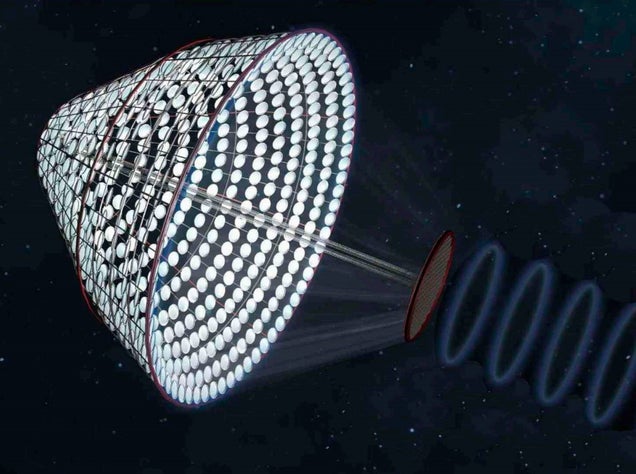

Image source: io9.com


1. Tobacco Leaves

Most people have heard about turning corn into biofuel. But corn is actually a terrible biofuel source for a number of reasons, which is why many scientists are looking to other plants for future fuel — including tobacco. Genetically modified tobacco, that is. The main building blocks for biofuel in plants are starch and sugar, so naturally, increasing the amount of starches and sugars in a plant will improve fuel production. An agricultural engineer recently found that she could tweak a gene in tobacco to boost starch production by 700%, which translated to an increased sugar yield (a step in biofuel production) of 500%. As a bonus, this technique could be used on food crops to increase starch and sugar production.

2. Sugar Batteries

Current battery technology relies on toxic metals, which are difficult to mine, have limited lifespans, and create recycling and disposal issues. Sugar, on the other hand, has none of those problems. Recently, a group of bioengineers built a prototype of an "enzymatic fuel cell" that imitates the behavior of biological systems (like plants) that convert glucose to energy. The resulting battery creates more energy than a lithium-ion battery, is biodegradable, and refillable.
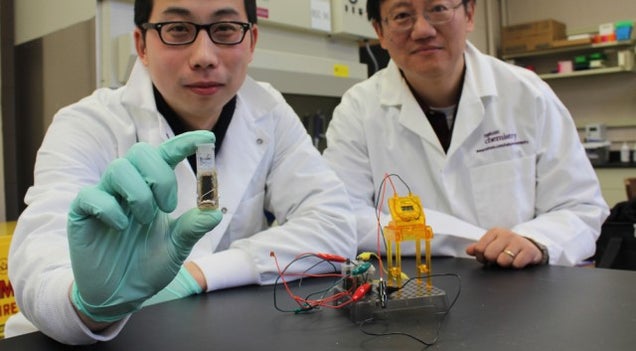
Image source: io9.com


3. Jatropha curcas

This plant produces oil-rich seeds which are excellent for biodiesel, and it is able to thrive in dry, sandy lands that aren't good for food production. That means the plant could be grown in areas that aren't required for food crops. Unfortunately, the plant's seeds don't thrive as easily as the plants do in poor soil. Now, scientists are working on ways to genetically modify this crop in a number of ways make it more suitable for biodiesel production. The result could be a hardy crop that can live almost anywhere, and produce incredible amounts of fuel.

4. Algae Machines

Unlike Jatropha curcas, which is a plant that might one day be a source of fuel, microalgae are pretty much fuel-ready. They grow in the ocean, and thus don't compete with food crops. Plus, they produce more starch and sugar than the blue-green algae known as cyanobacteria, which are also being explored as a source of alternative energy. The problem? It's hard to get a giant crop of microalgae. Currently, researchers are looking at ways to genetically modify this microalgae to make it a more robust fuel source.

If that isn't futuristic enough for you, researchers are also integrating genetic "circuits" into bacteria and algae in order to produce biofuels from photosynthesis. Essentially, they'd add new molecular machinery to bacteria and algae that don't already have them. There are even proposals to engineer the actual light-absorbing antennae in these organisms to increase efficiency and biofuel output. This would mean genetically altering the systems that these microorganisms use to absorb light — we wouldn't actually be adding tiny metal antennae to them, though that would be cool.

5. Super Yeast

Conversion of plant material to fuel isn't always efficient, especially because that plant material is often waste left over from forestry and agriculture. However, biologist Na Wei and colleagues have discovered that they can genetically modify a form of yeast to digest the tough, fibrous xylose in plants. Normally this part of the plant goes unused, as it creates a toxic, acidic environment for the microbes that would normally break it down into those much-needed sugars. But the enhanced yeast are able to digest xylose into the chemical components that could make biofuel. This super-yeast could help us convert plant waste into valuable energy.

6. Corny Switchgrass

Switchgrass is a controversial biofuel crop. It is fast growing, produces a lot of material for fuel production, but is also invasive, taking over new lands where it is introduced. Still, it might one day prove very useful — especially if we add a few extremely useful genes to its repertoire. A group of biologists found that by genetically modifying switchgrass with a gene from corn, they could boost the amount of starch and digestibility of the switchgrass (making it easier and more productive to convert to fuel), and completely shut down the flowering of the plant, potentially preventing invasion.

Image source: io9.com


7. Artificial Photosynthesis

Researchers at Caltech and Lawrence Berkeley National Lab are researching what they call "artificial photosynthesis." Their goal is to produce a synthetic version of the molecular machinery that plants use to make energy from light and water. The result would be something that looks like a solar panel inside a plastic chassis — it's made of thin membrane sheets comprised of semiconductor materials. By pumping water through the device, and bombarding it with light, we could produce liquid hydrogen or hydrocarbons. This solves the typical problem with solar energy, which is storage. Because this solar fuel would be liquid, we could use our current fuel storage infrastructure to hold and distribute it the same way we do with oil and gas.

Read the rest of the list on io9.

Janique Goff, a business development manager, specializes in providing marketing and developmental assistance to biotechnology startups. Get updates on biotechnology and the environment on this blog.

Thursday, November 22, 2012

Second Life for Old Electric-Car Batteries: Guardians of the Electric Grid

By Josie Garthwaithe, National Geographic. Original article and images can be accessed here.

Imagine a future in which old electric-car batteries are deployed in neighborhoods as energy-storage systems that guard against power outages, while paving the way for wind and solar power—and more electric cars. The idea has moved one step closer with the demonstration of a boxy unit of used Chevy Volt batteries capable of providing enough electricity to power three to five average American homes for up to two hours.

Developed by General Motors and ABB, one of the world's largest electric-technology companies, the device features five lithium-ion battery packs from plug-in hybrid Volts, strung together in a new arrangement and cooled by air instead of the liquid used in their former lives on the road. The batteries are degraded below acceptable performance levels for cars, but the companies say the batteries have enough life to serve the grid for at least ten years in this device, a community energy storage unit.

"In a car, you want immediate power, and you want a lot of it," said Alexandra Goodson, business development manager for energy storage modules at ABB. Many grid storage applications, on the other hand, involve slow, steady delivery of energy. "We're discharging for two hours instead of immediately accelerating," she said. "It's not nearly as demanding on the system."

The Road to Renewables

The partners previously demonstrated the technology in a lab environment. Now, said Pablo Valencia, senior manager of battery lifecycle management at GM, "It's become a reality," during a presentation Wednesday in Sausalito, California, where GM set up a demo unit about the size of a few refrigerators to power video, lights, and audio in an outdoor tent. "This is an industry first, to be able to use secondary automotive batteries in a grid-based application," Valencia said.

To test the repackaged Volt batteries in the real world, partner Duke Energy, the largest utility in the United States, plans to install this unit next year in the field alongside a transformer. "We'll test it as long as it takes to highlight all the value streams," said Dan Sowder, senior project manager for new technology at Duke.

Deployed on the grid, community energy storage devices could help utilities integrate highly variable, and sometimes unpredictable, renewables like solar and wind into the power supply, while absorbing spikes in demand from electric-car charging.

"Wind, it's a nightmare for grid operators to manage," said Britta Gross, director of global energy systems and infrastructure commercialization for GM. "It's up, down, it doesn't blow for three days. It's very labor-intensive to manage." Sowder, whose company serves 7.1 million customers in the U.S. Midwest and Southeast, explained, "Our grid, and most electricity grids, are not really designed to handle that kind of rapid swinging. Storage can help dampen that out." Smooth delivery of renewable energy has been a major research area for Zurich, Switzerland-based ABB, the world's largest supplier of electrical equipment to the wind power industry.

Meanwhile, on the demand side, utilities are staring down the possibility of huge spikes in energy demand from electric cars, which represent "probably the largest electrical load introduced to a residential setting in 50 years," said Scott Hinson, director of the Pike Powers Commercialization Lab in Austin, Texas.

"That is a little bit alarming for a grid that was not designed to handle that load," adds Sowder. Community energy storage devices can be charged at times when, say, wind is kicking up a storm at night but there is little demand for electricity, and make it available when needed. "The result can be less infrastructure upgrades needed to support electric-vehicle charging."

Seeking Grid Solutions

GM isn't the only automaker looking to help build a secondary market for its electric car batteries. In January, Nissan North America joined with ABB, 4R Energy, and Sumitomo Corporation of America to announce plans to build a prototype of a grid storage system using Nissan Leaf batteries.

After all, if the battery—the most expensive part of an electric car—remains an asset beyond its useful life in the vehicle, Valencia said, "It helps with residual values." That's the term used to describe how much a car is worth at the end of its lease or the end of its useful life—a key factor in determining lease rates and resale values. As a result, he said, "We're helping the first customer."

"If there is a market in stationary power for spent batteries, consumers could recognize this as an increased resale value at end of life, however small," said Kevin See, an analyst with the research firm Lux Research.

Of course, because electric cars like the Volt and the Leaf are new to the market, there will not be a large supply of spent electric-car batteries for some time to come. The batteries are supposed to last for up to ten years in the car. For the demonstration unit, GM scavenged its own laboratories to find batteries that had been degraded by simulations.

The batteries in the demo unit had been degraded down to about 85 or 90 percent of their original capacity, Valencia said. "We were calling everybody and saying, 'Give me your oldest batteries,' " he said. But GM envisions old batteries eventually will be tracked down and purchased for grid-storage use through the same system used today to auction off parts like water pumps and starters at the end of vehicle life for recycling or rebuilding. Before a vehicle is scrapped, its ID number is scanned to pull up a list of all the "core" components for which there is demand.

Adapting lithium-ion batteries from electric vehicles adds complexity to the task of designing energy storage for the power grid, however. "You must take a battery that's designed to function in a very specific, mobile, volume- and weight-constrained application in cars," said See. And the necessary adaptations vary by type of car. "A fully electric vehicle battery is designed to hold maximum energy, while a hybrid is designed to have a higher ratio of power to energy." Ultimately, he said, this extra complexity "could add further cost in preparing those systems for an entirely different application than the one they were initially designed for."

Spent car batteries face tough competition from new lithium-ion batteries designed specifically for a given grid application, said See, as well as alternative technologies like flow batteries and molten salt batteries, which have the potential to cost less. "There is and will be no shortage of Li-ion batteries given the explosion of manufacturing capacity in the face of limited demand," See said.

Yet it's possible that stationary power customers looking for batteries could purchase spent EV batteries at significant discounts, he said. "Those customers would be the real winners, provided those batteries hold up, rather than the automakers." Indeed, according to Sowder, Duke Energy is "hopeful," but not sure yet that adapted Volt batteries will save money.