Friday, August 2, 2013

REPOST: Tasmania's old growth forests win environmental protection

The World Heritage Committee now lists as a World Heritage Area nearly 200,000 hectares of Tasmania’s old growth forest, The Guardian reports.

Scoured out old growth forest tree at Mt Field National Park, Tasmania Photograph: James Lane/AAP Image


Almost 200,000 hectares of Tasmania’s old growth forest have been world heritage listed, bringing hope that a three-decade fight between environmentalists, politicians and loggers is over.

The World Heritage Committee has extended the heritage listed boundary of the Tasmanian Wilderness World Heritage Area by more than 170,000 hectares after accepting a proposal from the Australian government which will give the areas the highest level of environmental protection in the world.


The old growth forest areas now added to the heritage listing are in the Upper Florentine as well as within the Styx, Huon, Picton and Counsel River Valley.


Logging will continue in the forest in areas Environment Minister Tony Burke described as “less contentious”.


The proposal the government put to the World Heritage Committee was the work of people within the forestry industry as well as environmentalists, including Miranda Gibson who famously spent 457 days living in a tree in the old growth forest in a campaign for extended environmental protection.


Speaking from Hobart where she had watched a livestream of the World Heritage Committee handing down the decision, Gibson said she was thrilled and had contemplated returning to the tree if she was unhappy with the decision.


“It’s good to know I don’t have to go back to the tree unless I want to visit,” she said.


“The hardest part [of living in the tree] was not knowing how long I would be up there or if the loggers would come and log around me.


“It was obviously also very isolating.”


Gibson started living at the top of the 60 metre eucalypt tree in December 2011 and was driven out by bushfires in March this year. By then the proposed extended areas for world heritage listing had been granted temporary protection.


She decided to campaign from the ground until the committee handed down their official decision.


Environmentalists have been fighting for protection of more of the old growth forests in Tasmania for years, while the forestry industry argued it was vital for jobs in the state that logging of some parts be allowed


“Today is the result of decades of people standing up for the forest,” Gibson said.


“It is testament to the strength of the community we have been able to achieve this.


“If it was not for individuals standing up over the past few decades there would be many parts of the forest that would already be gone.”


While the natural values of the forest have been listed there is still a fight for the cultural values to be recognised.


Burke said the government would continue to consult with Indigenous communities in Tasmania to have the cultural values considered by the World Heritage Committee.


“For the first time it’s [an environmental agreement] been done, not through a political process, but through a genuine community process where industry and environment groups came up together with a package that they thought would deliver what each of them wanted most,” he said in a statement.


“We have the conservation groups saying the high conservation areas are being protected and for the people who look at it from an industry perspective this is part of that entire package that has resulted in 30 years of conflict in Tasmanian forestry being resolved through an extraordinary agreement that made it through the stakeholders made it through the parliament and now has been endorsed by the WH committee as being a conservation outcome of international importance.”


The Tasmanian Wilderness World Heritage Area is home to tall eucalypt forests, glacial landforms and alpine and sub-alpine environments. The Styx-Tyenna area has the highest concentration of tall eucalypt forest in the world.


The area is also important habitat for rare and threatened species such as the endangered wedge-tailed eagle and the Tasmanian Devil.


Greens Leader Christine Milne tried with former leader Bob Brown to have the areas of the forest world heritage listed in 1989 but the pair’s efforts were thwarted by then-Premier Michael Field who drew up conservation boundaries environmentalists have long criticised.


“It’s fantastic that after so many years of campaigning conservationists around Tasmania, and indeed the world, can celebrate the protection of these magnificent wild forests that contain the tallest flowering plants on earth and an array of wonderful wildlife,” Milne said.


“In recognising the decades of work of conservationists I want to pay tribute to the late Helen Gee who was involved for 40-plus years and whose book For the Forests is a wealth of information on all those people who, in many cases, put their bodies in front of the bulldozers.


“We can all smile broadly knowing that at last Tasmania’s forests of outstanding universal value are now protected for all time.”


For more updates on the environment and ecological of environmentalist Janique Goff, visit her Facebook page.

Tuesday, June 25, 2013

National Geographic's best hikes

As is its wont, National Geographic has released a new list of the world’s best hikes, a new turn for nature-lovers who are tired of the same old trails. The predominant feature of these trails is history—NatGeo chose them specifically for their power to reveal the culture and narrative of the populations that live there.

Image source: adventure.nationalgeographic.org


1. Mt. Kailash Pilgrimage, Tibet: This is sacred territory held dear by Hindus and members of its Ayyavazhi sect, Buddhists, and Jains. China has made inroads into the trail, though the mountain itself remains closed off to climbers. It also hosts the breathtaking Lake Manasarovar, known for its pristine, icy blue waters.

Image source: adventure.nationalgeographic.com

2. The Way of St. James via the French way, Spain: Among all the featured trails, this one traverses a quietly gentrified Europe as a trade route dating back to the ancient Roman era through the Middle Ages. It is best for a spring sojourn, with its status as a UNESCO World Heritage Site unleashing a bevy of cozy inns and restaurants that will restore weary travelers.


Image source: adventure.nationalgeographic.com

3. Shackleton's route, South Georgia Island, Antarctica: A bit out of the way is this snowy trail, an agglomeration of glaciers and crevasses that tempt daring adventurers. Sea explorers led by Ernest Shackleton came upon it after a ship mishap, an inhuman and potentially fatal struggle across mountains to give this modern heritage site its unintended name.


Image source: adventure.nationalgeographic.com

4. Great Himalaya Trail, Nepal: If skipping from stone to stone is your thing, then this trail—GHT for short—is a breathtaking, moving view of the Himalayas. Nepal has one of the most tapped yet preserved paths for mountaineers, and this trail is where a friendly reconnoiter with Sherpa, its centuries-long inhabitants, could happen.

For the complete list, click here.

A passion for the environment drives Janique Goff to research and discuss the most beautiful sights in the world. Follow this Facebook page for more information on exciting sights for environmentalists.

Monday, May 27, 2013

Living in the age of extreme weather


Image source: newscientist.com

Widespread drought, thousands of tornados, exceptionally heavy monsoons, and record flooding are leading some people to conclude that the age of extreme weather has finally commenced. And rightly so. The past couple of years have witnessed extremely bad weather that the “breaking of records” was the best indication that recent disturbances were outside the normal range.

And as climate continues to change, scientists believe there will be more heat waves, droughts, and floods as the atmosphere continues to warm. Hurricanes may be more frequent, too -- or more powerful.

With the likelihood of such extreme weather disturbances occurring more frequently, how can people prepare?


Image source: solarhaven.org

The destruction brought about by the massive tornado in Moore, Oklahoma, on May 20 has opened up discussions on tornado-proofing cities to reduce and even eliminate loss of lives when twisters occur; a survival plan of sort for America’s tornado danger zone. Many believe that with the right policy and the right incentives, doing so is possible.

Efforts championing disaster preparedness are always welcome. However, preparedness should also come with understanding why extreme weather is happening in the first place. Although many still believe that weather disturbances are more weather than climate change, it cannot be discounted that some of the recent floods, droughts, and heat waves can also be attributed to human-induced climate change.


Image source: telegraph.co.uk

The discussion on climate change will never wear out Janique Goff, a champion supporter of various ecological initiatives. Learn more about her environmental advocacies here.

Monday, April 22, 2013

Cash in on recycling electronic waste

Image Source: connect.eng.wayne.edu


Of all the materials that can be recycled, metals are the most valuable. There are huge incentives to recycle metal waste in both ecological and economic standpoints that it remains the most cost-effective and energy-efficient form of recyclable material. The sheer amounts of energy and money saved from mining and smelting—both environmentally destructive and heavily polluting industries—justify its cost.

Image Source: tehama.ca.us


And with the rising number of people using (and disposing of) consumer electronics, a new relatively untapped potential for recycling has emerged. Recycling obsolete laptops, old cellphones, and other consumer electronics en masse can have a very positive effect on the environment. The Environmental Protection Agency states that recycling one million cellphone units can recover 35 thousand pounds of copper, 772 pounds of silver, 75 pounds of gold, and 33 pounds of palladium, while recycling one million laptops can conserve the energy equivalent of more than 3,500 American homes.

Image Source: annualreport2009.premierfarnell.com


Many electronics retailers and charities throughout North America readily accept old and broken electronics, though there are special considerations to be made when recycling old batteries.

Although this practice is not unknown and is growing in popularity, recycling consumer electronics has yet to gain traction. Only about one percent of consumer electronics are recycled in the United States alone. Humor site Cracked.com calls this one of five unsung ways people can effectively (and effortlessly) save the world.

For more updates on the environment and ecological initiatives, visit Janique Goff’s Facebook page.

Wednesday, March 27, 2013

Gold from ivory: Stop the crime

Image source: British Campaign Furniture


 Markets for ivory, legal or underground, abound. Many people buy and sell ivory for its beautiful qualities. Unfortunately, only a few actually know where this material comes from. The best ivory in the world cannot be produced by man; it can only be brought to the earth by Mother Nature, specifically by elephants.

Image source: African Wildlife Foundation
 Many organizations, like the World Wildlife Organization (WWF), constantly battle against abuse on nature, specifically on wildlife. Many entrepreneurs and environmentalists, like Janique Goff and Doug and Kris Tompkins, also help in the cause. However, this is not where it ends.

Image source: Fanpop.com

This article by Dekila Chungyalpa of WWF speaks of four Buddhist teachers from Thailand who are preaching against ivory trade and calling the attention of the Thai government to shut down this kind of business. To see this practice truly and totally abolished means that there is a need to bring the fight to the people. To borrow the words of the mentioned article, the success of this endeavor relies on giving back “the reins of conservation to local champions.” It is only when the people have clearly understood what is wrong and eventually act upon a solution to solve the problem will the crisis be truly averted.

Learn how you can help save the planet by following Janique Goff’s Twitter page.

Tuesday, February 26, 2013

Warning: Styrofoam food containers are dangerous

If you think that seeing your kids playing styro-snow is cute, then think again.

The extruded polystyrene foam, or colloquially known as styrofoam, is everywhere. Nonetheless, it being ubiquitous does not mean it is safe. Perhaps people just got used to it and thought of it as part of their everyday life.

Image source: noschoolthingy.com
Styrofoam and food

Since styro is 98% air and 2% polystyrene, a minimum of 100 degrees Celsius is enough to separate the air and toxic produce carcinogens and neurotoxins, which are dangerous to humans. Hence, when food is heated in a styro container, it gets contaminated by substances called styrene and benzene, which may lead to irritation of the stomach, convulsions, coma, and death. Even the FDA warns the Americans on purchasing instant food with non-microwave-safe labels because these can cause different life-threatening illnesses.

Image source: blueberrydew.wordpress.com

Styrofoam in the environment

Extruded polystyrene foam takes more than 200 years to decompose because it is non-biodegradable and a non-renewable source—a valid reason why most landfills in the world are chiefly comprised of unrecyclable plastics and polystyrene foams. However, eliminating polystyrene is becoming more and more difficult every day, since the entire global commercial industry is dependent on this cheap and practical packaging material. In a larger scope, the chlorofluorocarbons present in all extruded polystyrene products have the capacity that is more powerful than carbon dioxide and carbon monoxide to destroy the already-deteriorating ozone layer and worsen global warming.

Image source: greenliving.lovetoknow.com

Styrofoam and such hazardous materials may rank atop Janique Goff’s list of things to campaign against. Visit this MySpace page for her latest activities.

Monday, January 28, 2013

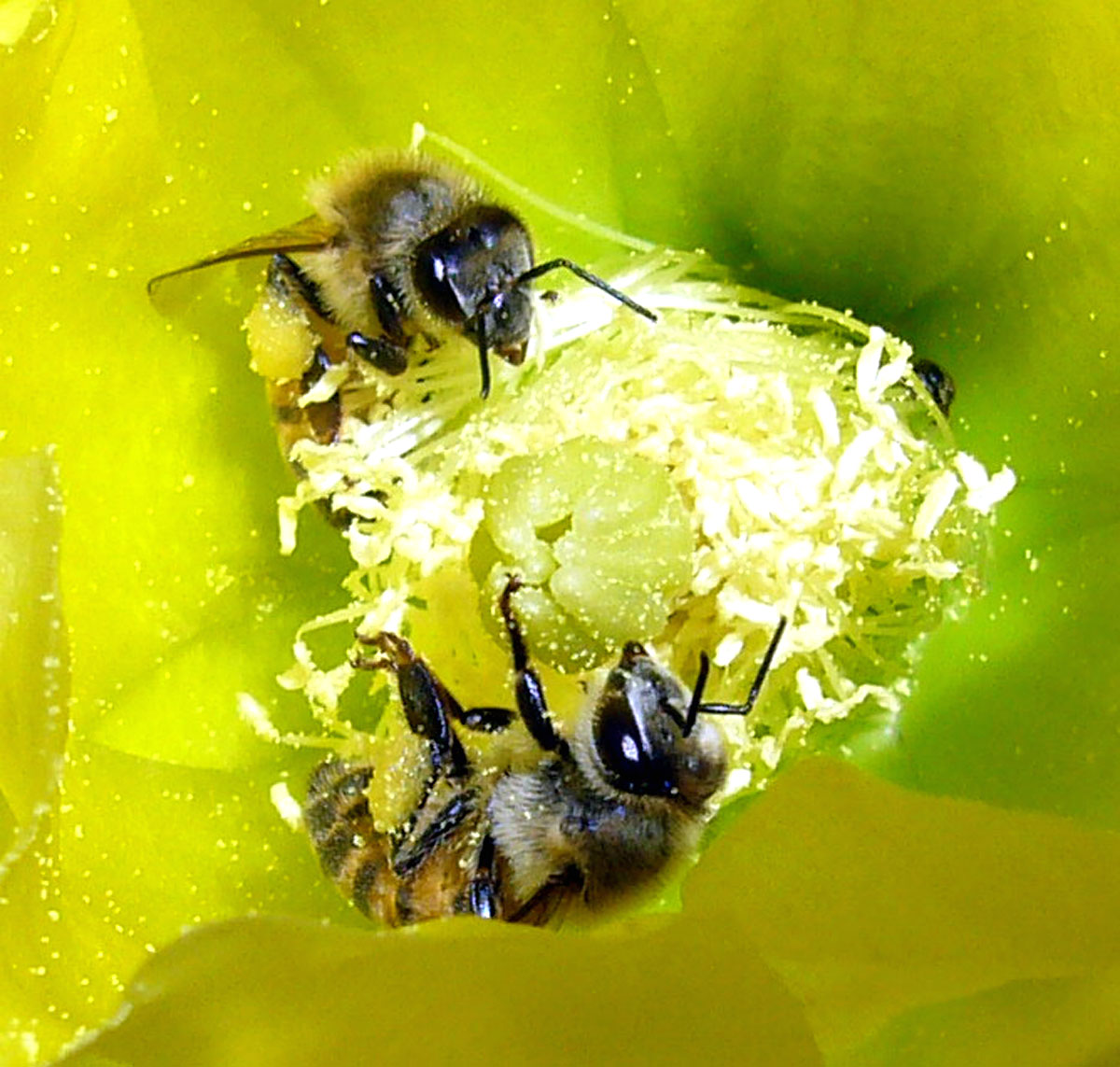
Beeware of food supply drop: How bee population decline impacts agricultural yield

Climate change has taken its toll for more than a century now. The past decades may have seen its effects less violently, but the recent natural tragedies suggest that its impact is escalating big time. In fact, it is harming even the tiniest members of the biosphere, fuelling a chain reaction that affects many other forms of human activities particularly agriculture.

Image source: commons.wikimedia.org
Bees, via pollination, contribute to a sizable crop yield in America. However, their present population has rapidly dwindled as compared to their number more than 50 years ago. The culprit is believed to be climate change and its associated factors, such as diseases spread by parasites and the spraying of crops with pesticides. This ecological catastrophe is plaguing the agriculture sector on a large scale.

Image source: commons.wikimedia.org

Unless immediate actions are taken, food supply in the US can be put in peril. The farmers’ inability to meet production quota can become a permanent dilemma and consequently, shelves in food stalls and grocery stores might become nearly empty. For example, in February 2004, there were inadequate honeybees for all the almond blossoms in California, resulting in farmers failing to meet expected yields.

“There are shortages that pop up from time to time,” says Claire Kremen, a conservation biologist at Princeton University. “Whether there are more [shortages] than there were 20 years ago, one would guess yes, as there are fewer bees to go around, but it's not well documented.”

Image source: commons.wikimedia.org

While honeybees are not yet totally extinct, it is better that everyone helps in fighting the many ill industrial activities of man that possibly cause the insects’ population decline. People should also help expand green horizons through reforestation and increase the production and use of renewable energy. Small contributions can make a huge difference.

Janique Goff is an active supporter of programs and causes that gear toward eco-preservation and sustainable development. This blog provides more information about her advocacy for nature.